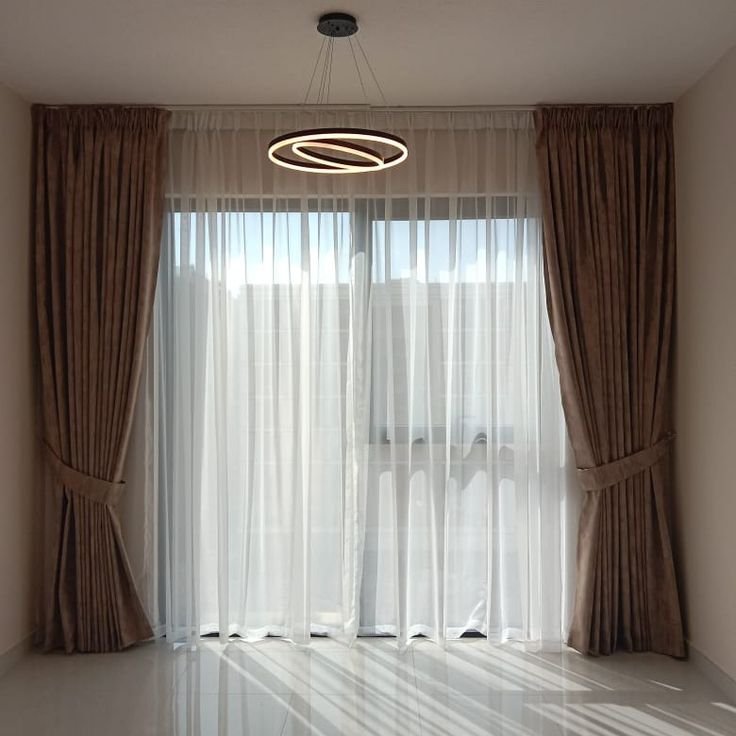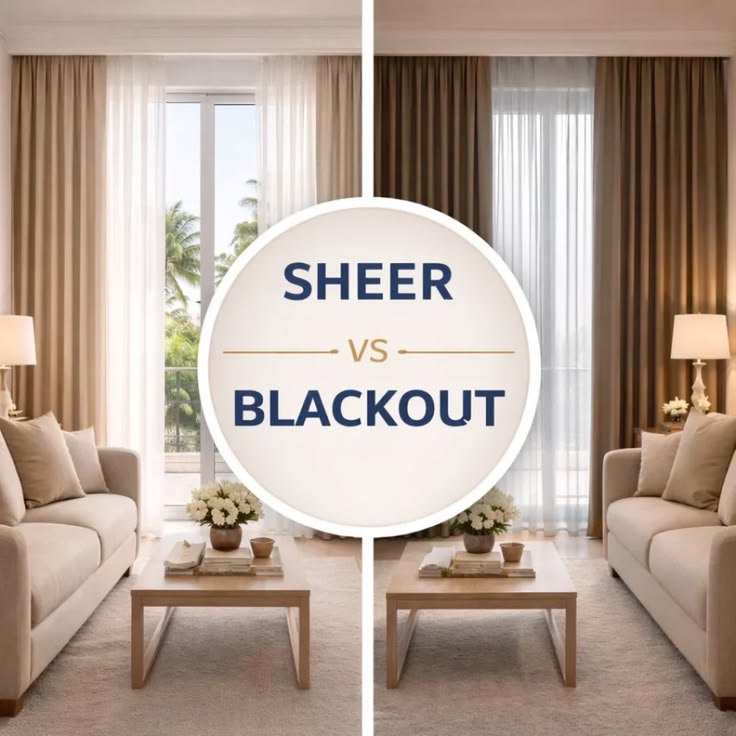

Walk into a room with full-height curtains, and it feels finished. The walls look taller, the light looks softer, and the window becomes part of the design. But choosing floor-to-ceiling curtains isn’t just about looks. In Abu Dhabi, strong sun, glare, and air conditioning running most of the year matter too.
Five Star Curtains and Upholstery works with custom curtains, blinds, and upholstery for homes across Abu Dhabi, so this guide is written with local homes in mind.
What Are Floor-to-Ceiling Curtains?
Floor-to-ceiling curtains hang from the top of the wall, or very close to the ceiling, and fall to the floor. Standard curtains stop just above the window frame, leaving bare wall around them. Full-height curtains cover that gap.
You may also see them called floor-to-ceiling drapes, floor-to-ceiling draperies, or floor-to-ceiling window coverings. Some people also say floor-to-ceiling window curtains. They suit living rooms, bedrooms, dining rooms, and home offices. They also work well as large window curtains for balcony doors and sliding glass panels, which are common in Abu Dhabi apartments and villas.
Why Are Floor-to-Ceiling Curtains So Popular?
They solve several problems at once. The long vertical lines make a room feel neat and calm. They cover the whole window area, so you get better control of sunlight and fewer strips of glare.
Privacy is another reason. Many apartments face nearby buildings or busy roads, and full-height fabric extends past the window frame. Heavier fabrics can also help keep heat out. The floor-to-ceiling curtains benefits go beyond style, and the next sections look at each one.
How Do Floor-to-Ceiling Curtains Make Rooms Look Taller?
Your eyes follow lines. When fabric starts near the ceiling and ends at the floor, your eyes travel upward and see a taller wall. It is the simplest way to make rooms look taller without any building work.
Hang the track as high as you can. This also works for curtains for taller ceilings, where short curtains can look lost on a big wall.

For curtains for small living rooms and curtains for apartments, choose a light color close to the wall shade, keep the folds simple, and extend the fabric a little wider than the window. These steps are the easiest answer to how to make a room look bigger with curtains.
Can Floor-to-Ceiling Curtains Create a Luxury Hotel Feel?
Yes, without a big renovation. Luxury hotel curtains feel rich because of their length, their fabric, and their layers.
Velvet curtains give a deep, heavy look for bedrooms and formal rooms. Linen curtains feel lighter and more relaxed. Sheer curtains add softness, and blackout curtains give real darkness.
Soft wave curtains add to the effect because the folds fall in even curves from end to end. Pair a sheer layer with a heavier curtain on a clean track, let both reach the floor, and you get the same hotel-suite look at home.
How Do Floor-to-Ceiling Curtains Improve Natural Light Control?
Sheer curtains let daylight in while softening glare. They suit living and dining rooms. Blackout curtains block most light, which helps in bedrooms and in home offices where screen glare is a problem.
The most flexible choice is layered curtain designs. With a sheer layer and a blackout layer, you can open both for full daylight, close only the sheer for soft light, or close both for darkness.
In Abu Dhabi, west-facing windows get very strong afternoon sun. A layered system lets you close the heavier layer at that time and keep the room comfortable.
Do Floor-to-Ceiling Curtains Give Better Privacy?
They do, because they cover the whole wall area with no gaps above, below, or at the sides. This matters in apartments facing other buildings and in ground-floor villas near a street. Good curtains for privacy should let you use the room comfortably at any hour.
For bedrooms, choose thick fabric or a blackout lining, since thin curtains can show shapes at night. For living rooms, a sheer and heavy combination works well. Also make sure the curtain is wide enough, because stretched-flat fabric looks thin and shows more.
Can Floor-to-Ceiling Curtains Improve Energy Efficiency?
They can help, though curtains are not a replacement for good insulation or an efficient air conditioner. Thermal curtains use thicker fabric or a special lining to slow heat moving through the glass.
Energy-efficient curtains work best when used well. Close them on the sunny side during the hottest hours so your air conditioner does not work as hard. That is how curtains to lower HVAC bills can make sense, but the savings depend on window size, direction, glass, and daily use, so do not expect a fixed number. Ask about lining and thickness, not only color.
What Are the Best Neutral Colors for Floor-to-Ceiling Curtains?
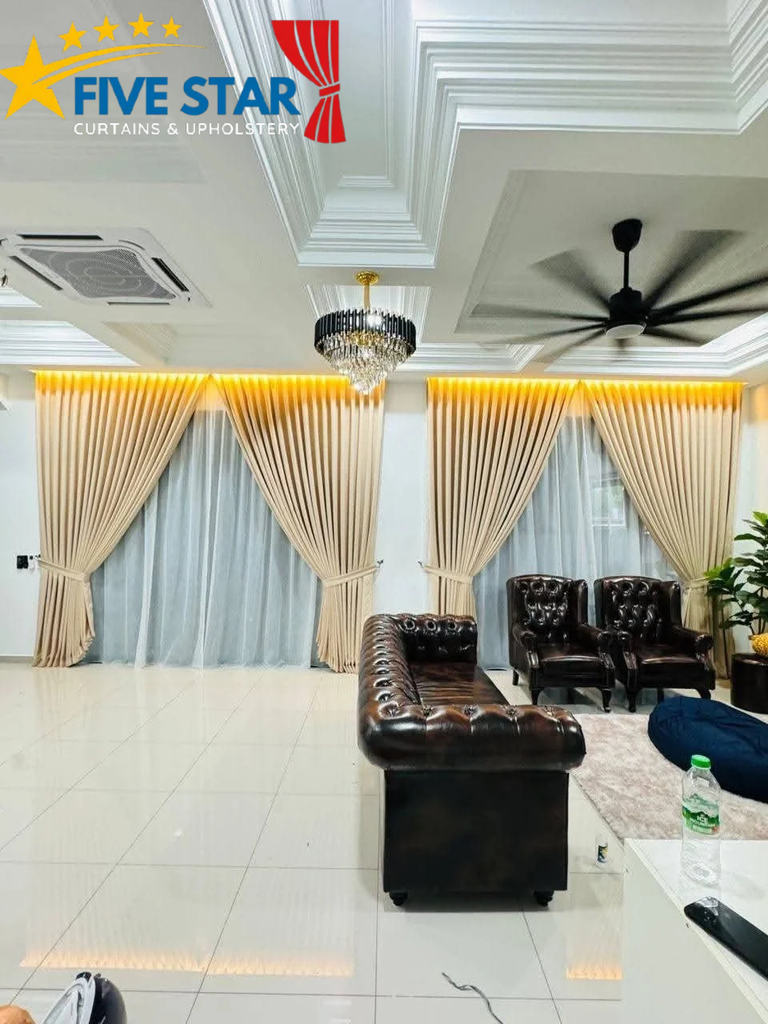
Neutral color curtains work in almost any room. Beige, cream, white, soft grey, taupe, and sand are all safe choices.
White and cream make a room feel bright, which suits small rooms. Beige and sand add warmth and go well with wood furniture. Grey and taupe look calm and hide dust better than white.
Start with your walls. A curtain in the same shade as the wall blends in and adds height. For contrast, go one or two shades darker. Look at fabric samples in morning and evening light before you decide, because colors change through the day.
Which Layered and Ceiling-Mounted Curtain Designs Work Best?
For most homes, layered curtains give the best mix of beauty and comfort. A sheer curtain sits at the back and a heavier one in front. These double-layer systems suit Abu Dhabi, where light needs change by the hour.
Ceiling-mounted curtain tracks fix straight to the ceiling, so the fabric starts at the very top of the wall. Concealed ceiling track curtains go further by hiding the track in a ceiling recess, so you see only fabric. These systems need exact measurements and a ceiling that can hold the track, so plan them early.
Are Patterned and Soft Wave Curtains Good Floor-to-Ceiling Design Ideas?
Both can look great in the right room. Patterned curtains work best when the rest of the room is plain. Subtle stripes and soft textures are easy to live with, while bold prints can feel heavy in small rooms.
Soft wave curtains suit long walls and wide glass doors because the folds look tidy whether open or closed. Linen curtains fit living rooms and bedrooms, and velvet curtains look rich in dining rooms and formal areas. These are good curtains for living room, curtains for bedroom, curtains for dining room, and curtains for home office spaces alike. Pick one main feature per room so the space does not feel crowded.
Conclusion
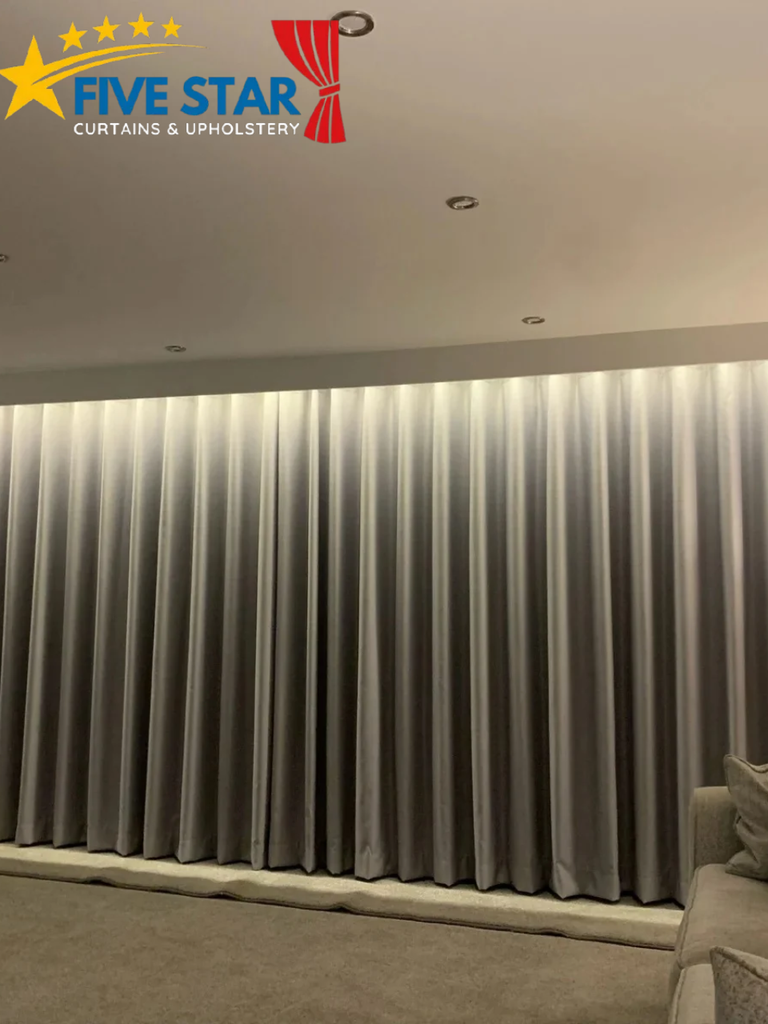
Choosing the right floor-to-ceiling curtains comes down to a few decisions. Pick the fabric for the job: sheer for soft light, blackout for darkness, thermal for heat. Choose a color that suits your walls, keep privacy in mind, and measure carefully from the track position to the floor. In Abu Dhabi, remember the sun. Layers give you flexibility, and thicker or lined fabrics help manage heat and glare.
Five Star Curtains and Upholstery can help you explore custom curtain solutions for your home. Arrange a consultation or measurement visit in Abu Dhabi and take the next step with confidence.
FAQ’S
Are floor-to-ceiling curtains suitable for small rooms?
Yes. The tall lines draw the eye upward and make the ceiling look higher. Choose light colors close to your wall shade, keep the folds simple, and hang the track near the ceiling. These are the best curtains for small living rooms and bedrooms.
What is the best fabric for floor-to-ceiling curtains?
It depends on the room. Sheer curtains suit living areas, blackout curtains suit bedrooms, linen curtains look relaxed, and velvet curtains feel rich. For sunny Abu Dhabi rooms, a thicker or lined fabric helps manage heat and glare.
Should floor-to-ceiling curtains touch the floor?
They can lightly touch the floor or stop a small gap above it. A small gap makes cleaning easier, while touching the floor looks softer and more luxurious. Choose based on your style and cleaning habits.
Are blackout or sheer curtains better for floor-to-ceiling windows?
Neither is always better. Sheer curtains keep rooms bright and private in the daytime, while blackout curtains block sunlight and create darkness. Many Abu Dhabi homes use both as layered curtains for flexible light.
How do you measure windows for floor-to-ceiling curtains?
Measure from the track position near the ceiling down to the floor, then measure the full width you want to cover. Add extra width at the sides for fuller folds. Small mistakes show easily, so a professional measurement visit is safest.